Skip to content

BLOG CricSport

Blog

01

Stories about the game, news from leagues and matches, and what is new in the CricSport app.
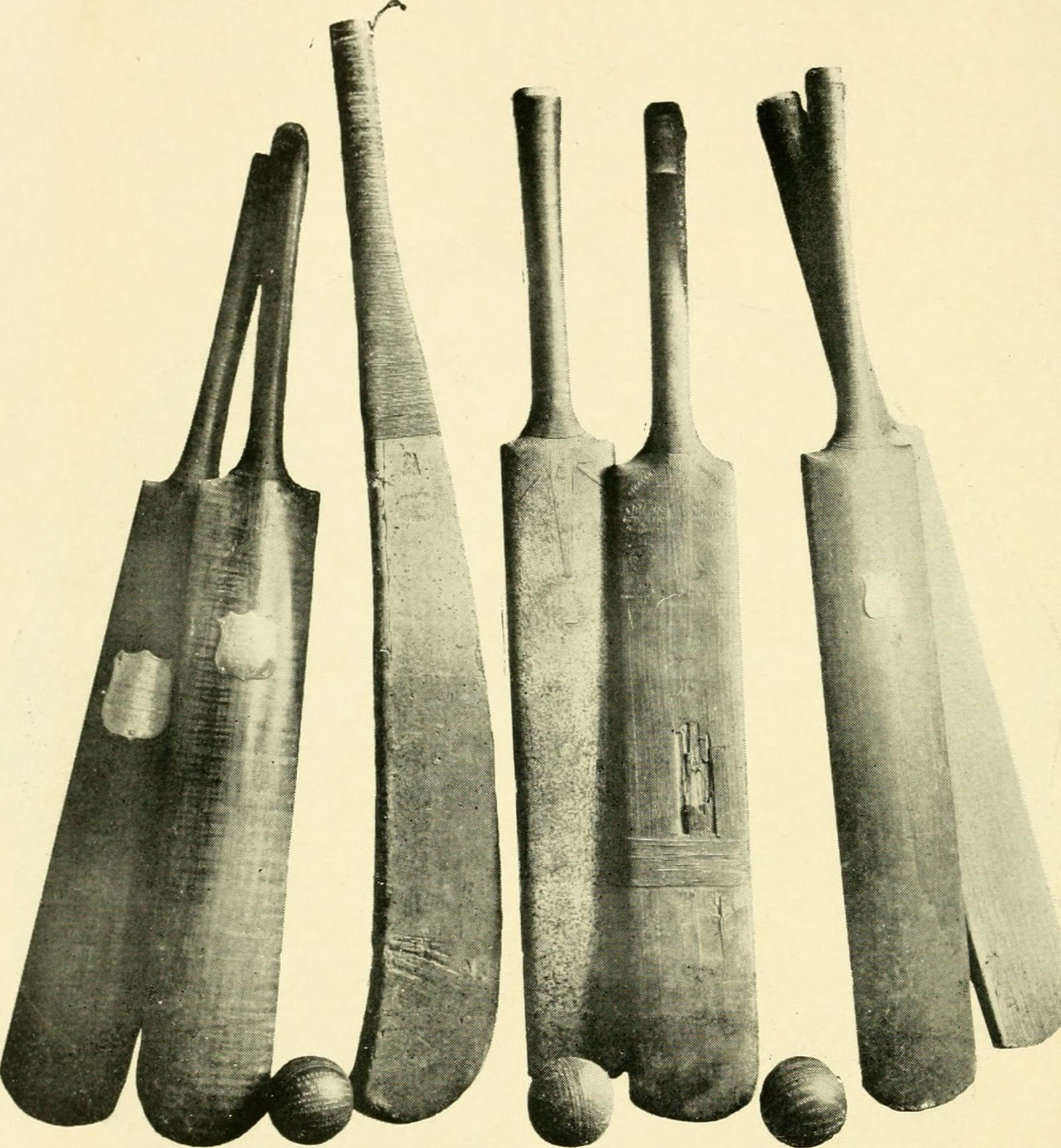
Historic cricket bats and balls laid out together
Photo: Internet Archive Book Images, via Wikimedia Commons (no known copyright restrictions)
Records

Batting average, strike rate and economy: what each stat means

Batting average, strike rate and economy are the three numbers most players ask about. Each one is a simple division, and each tells you something different about a player.

Read story →
Culture

Gully cricket: how to agree the rules before the match

Gully cricket is played in streets and small grounds with local rules. The fastest way to avoid an argument is to agree those rules before the first ball, and write them down.

Read story →
Equipment

How a cricket ball is made, and why it swings

A cricket ball is a cork core, wound tight, wrapped in four pieces of leather and stitched into a raised seam. Almost everything a bowler can do to the ball depends on that seam and on how the two halves wear.

Read story →
Records

How cricket league points work: wins, ties and no results

League points turn results into a table. A common scheme gives two points for a win, one for a tie or no result, and none for a loss, but every competition sets its own values.

Read story →
How-to

How many matches in a cricket league? Round-robin fixture maths

In a round-robin league every team plays every other team. With n teams that is n times (n minus 1) divided by two matches, or double that if each pair meets home and away.

Read story →
How-to

How to organise a cricket tournament: a step-by-step guide

Running a cricket tournament is mostly planning: a clear format, a fixture list everyone can see, a reliable scorer for every match, and standings that update as results come in.

Read story →
How-to

How to score a cricket match on your phone

Scoring on a phone means recording every ball as it happens: runs off the bat, extras, wickets and the over count. Done carefully, the scorecard is correct the moment the match ends.

Read story →
How-to

Knockout or group stage: how to choose a tournament format

A knockout gives a quick winner but a short trial for each team. A group stage followed by knockouts gives more matches and a fairer final, at the cost of more time and more fixtures.

Read story →
Records

Net run rate explained with a worked example

Net run rate compares how fast a team scores with how fast it concedes runs, across all its matches. It is the usual tie-break in league tables, and it is easy to calculate once you know the formula.

Read story →
Trivia

Strange ways to lose your wicket

Everyone knows bowled, caught, and lbw. The Laws also contain a set of rare dismissals that scorers should recognise on sight, because they turn up perhaps once in a career and then have to be written correctly.

Read story →
Culture

T20, ODI and Test cricket: the formats compared

T20, one-day internationals and Test matches differ in overs, length and how a result is reached. Knowing the differences helps clubs choose a format that suits their players and their ground.

Read story →
Culture

Tape-ball, gully, and the cricket most people actually play

The overwhelming majority of cricket played on any given day has no scoreboard, no umpire, and no full-size ground. It has its own equipment, its own laws, and it feeds every professional side in the world.

Read story →
Legends

The players who changed what a career looks like

A handful of careers did not just accumulate runs and wickets; they changed what the rest of the sport thought was possible, and in some cases forced the Laws or the schedule to move.

Read story →
Women's cricket

The women’s game has its own history, not a shorter one

Women have been playing recorded cricket since 1745, ran their own governing bodies for most of the twentieth century, and staged a World Cup two years before the men did.

Read story →
Product updates

Watch live cricket scores: how a live link works in CricSport

A live link lets anyone follow a match ball by ball without an account. When a scorer publishes a match, its score, overs and last balls appear on a live page that updates as the match goes on.

Read story →
Records

What a cricket record actually measures

Before you argue about the highest score or the best average, you have to agree which matches count, which innings count, and what a qualification threshold is doing. Most record disputes are definition disputes.

Read story →
Officiating

What the umpires are actually deciding

Two umpires on the field, a third watching replays, and a match referee handling conduct. Each has a defined job, and knowing which one owns a decision explains most of what happens after an appeal.

Read story →
History

Where cricket came from

Cricket surfaces in the written record as a children’s game in Tudor England, becomes a gambling sport for the gentry, and only acquires printed Laws, a governing club, and overarm bowling much later.

Read story →
Rivalries

Why the Ashes is a joke that never stopped

The oldest rivalry in the sport is named after a satirical obituary printed in 1882, and the trophy is a small urn. That accident of humour is a good introduction to how cricket rivalries actually form.

Read story →
Grounds

Why the same shot is a catch in one country and a six in another

Cricket is the rare sport with no standard field size and a playing surface that is deliberately prepared to favour something. The ground is a variable, not a backdrop.

Read story →

Questions about the blog

01 How often is the blog updated?
When there is something worth explaining: a law question, a tournament lesson, a history story, or a CricSport change.
02 Can I suggest a topic?
Yes. Send the question a scorer or captain would ask, and we will add it to the library if it fits.
03 Are the articles sourced?
The history and law articles name their sources at the foot of the page. Photos carry their photographer and licence.