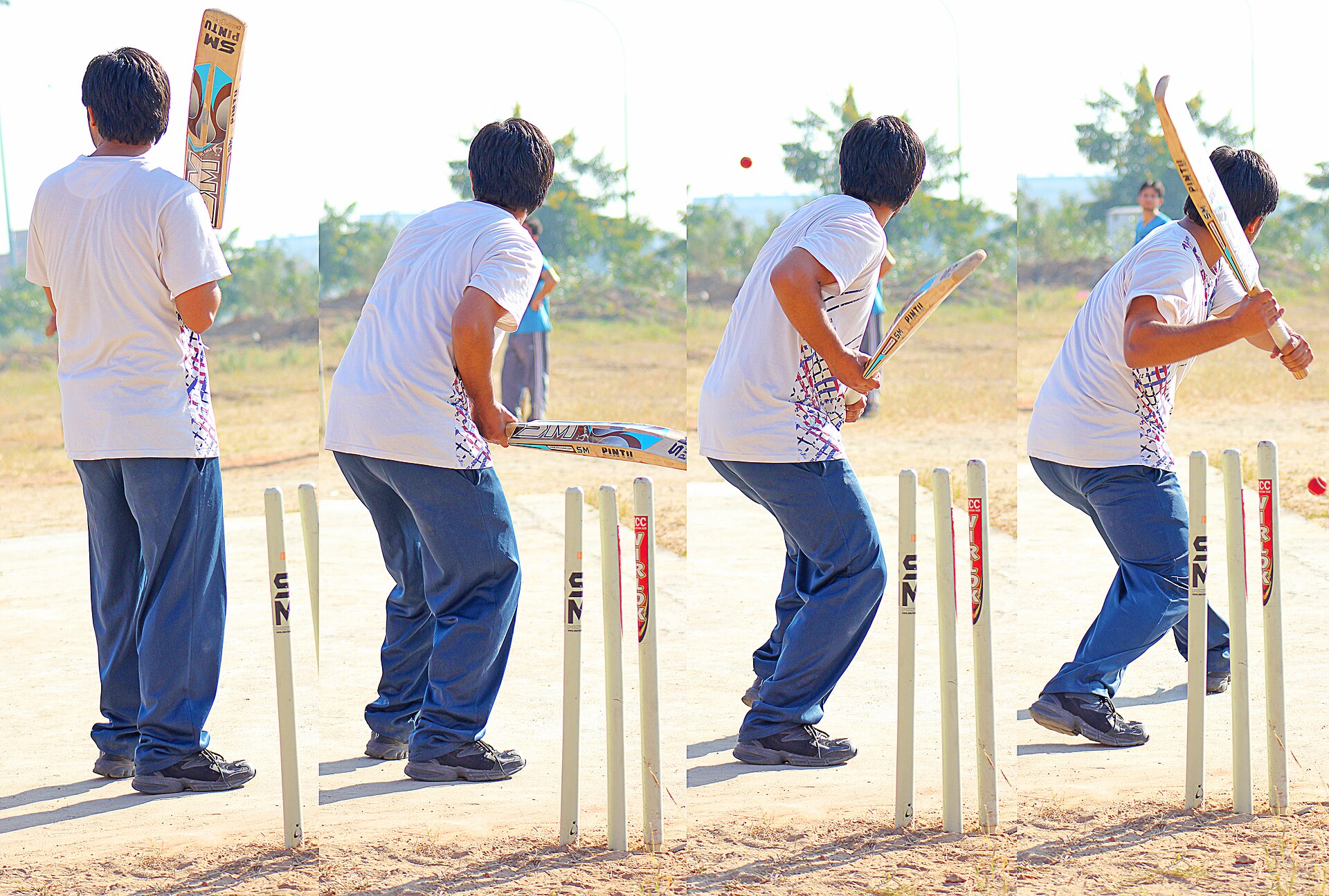
A tennis ball and a roll of tape
Tape-ball cricket — a tennis ball wrapped tightly in electrical tape — is generally traced to Karachi, and it spread because it solves several problems at once. The tape adds weight and pace, so the ball carries; it takes the bounce out of a bare tennis ball; it costs almost nothing; and it does not break windows the way a hard ball does. It also rewards a specific skill set, which is why a distinctive style of fast bowling keeps emerging from cities where children learn on it.
The playing conditions of the street
Street and gully cricket is not lawless. It is intensely governed, just informally:
- One-hand-one-bounce — a catch off one hand after one bounce is out, because you have three fielders and no space.
- Six and out — hitting it out of the compound loses the ball, so it costs you your wicket.
- Last man bats — the last remaining batter carries on alone, because the game has to end with a result.
- No lbw — nobody wants that argument without an umpire.
Every one of these is a rule invented to fit a ground, a ball supply, and the number of people who turned up. That is exactly what playing conditions are in the formal game; the difference is that a club writes them down.
The same game in different clothes
Village cricket in England, softball beach cricket in the Caribbean, matting-wicket cricket in Sri Lanka, ice cricket, indoor cricket, and box cricket in Indian company leagues are all cricket adapted to a constraint: a surface, a season, a budget, or a lunch break. The core stays put — a bowler, a batter, a wicket to defend, an over as the unit of time — and everything negotiable gets negotiated.
Why clubs should take it seriously
Two practical reasons. First, this is where players come from, and a club that treats tape-ball cricketers as unserious loses them. Second, if you run a gully or tape-ball tournament, the informality is a trap: the same ambiguity that is charming in a street game becomes a protest when there are points on it.
Write the conditions before the first ball — ball type, overs, whether lbw applies, what happens on six-and-out, how a tie is broken — and then score it consistently. A street game with an honest book is a real competition.
Why these games matter
Tape ball and gully cricket are where many players first learn the game. They teach reactions, quick decisions and the importance of teamwork, and they keep the sport close to the community that plays it. Formal cricket depends on these informal games for new players.
Keeping the spirit
The best informal games agree their rules quickly and keep them simple. A clear rule for a boundary and a clear rule for an out prevent most arguments. If you run an informal game, write the rules down and let everyone see them.
Match questions
Questions scorers actually ask
- 01 What is tape-ball cricket?
- A street game played with a ball wrapped in tape, usually with a softer bounce and local rules about boundaries and dismissals.
- 02 Should street cricket be scored?
- Only if the group cares about results. A simple tally is enough, and the rules should be agreed before the first ball.