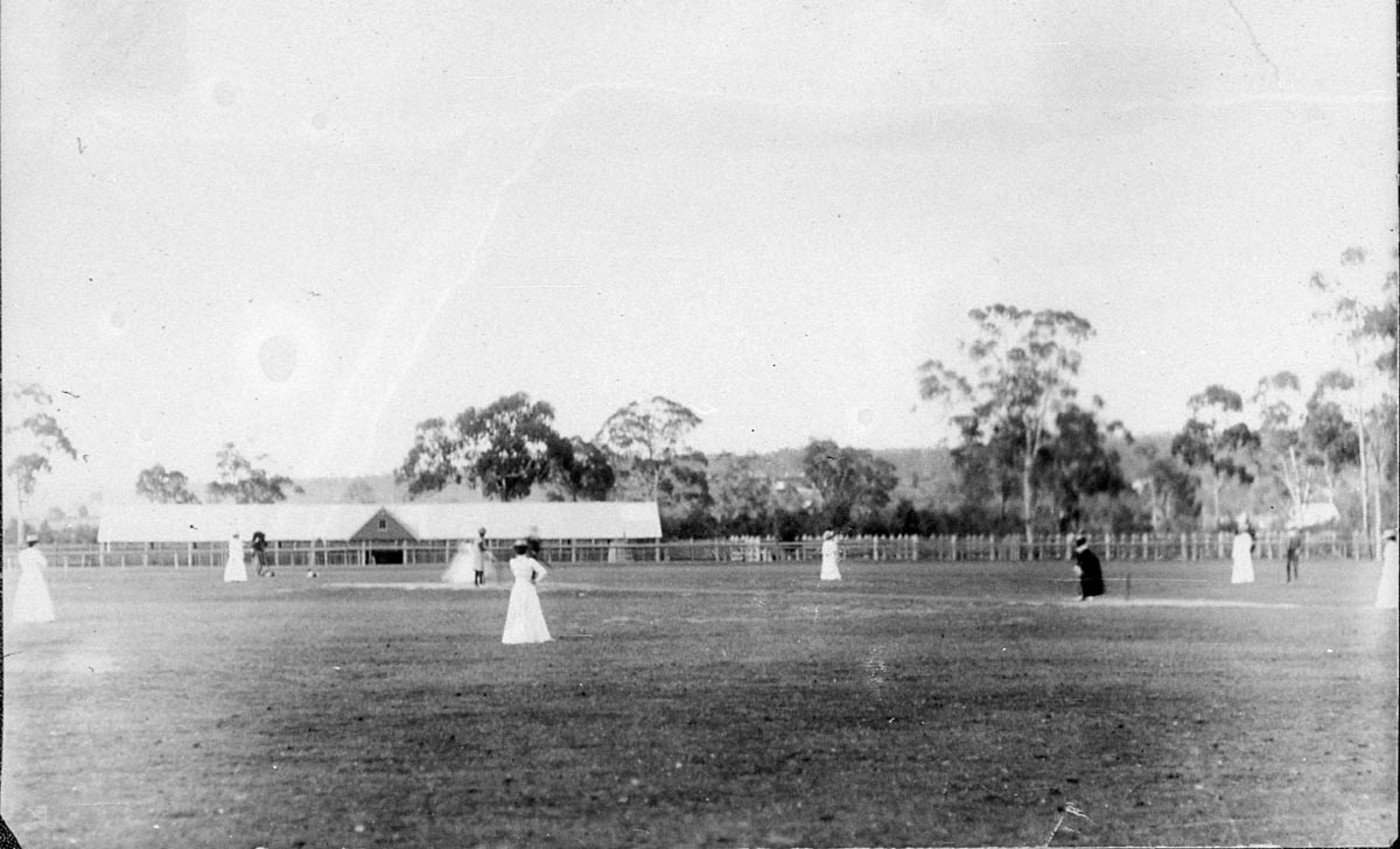
1745, Gosden Common
The first known account of a women's cricket match was printed in 1745, describing a game between the villages of Bramley and Hambledon in Surrey. The report is admiring about the standard of play. That date matters: it is early in the recorded history of cricket of any kind, not a late addition to it.
Through the eighteenth and nineteenth centuries the women's game existed in the same places the men's did — village greens, country estates, touring exhibition sides — with the same mix of enthusiasm and disapproval.
Their own institutions
The Women's Cricket Association was founded in England in 1926 and ran the game independently for decades: fixtures, tours, coaching, and eventually international cricket. The first women's Test match was played between England and Australia in 1934-35.
The first Women's Cricket World Cup was held in 1973, two years before the first men's World Cup. It is worth sitting with that, because the usual assumption is that women's cricket has been following behind. In the case of the limited-overs global tournament, it went first.
Administrative merger came much later. The International Women's Cricket Council merged into the ICC in 2005, and national boards absorbed the women's associations around the same period. That brought resources and scheduling power, and it also ended a long era of self-governance.
What changed in the professional era
Central contracts, franchise leagues, and standalone broadcast deals arrived in the 2010s and 2020s, and the cricket changed with them: higher fielding standards, genuine fast bowling, and batting built around a scoring rate rather than survival. Most of the eye-catching statistical shifts in the women's game are recent because full-time professionalism is recent.
The Test problem
Women's Test cricket is rare, which distorts the record. Careers are measured largely in white-ball cricket, and a player can be among the best of her generation with a handful of Tests. Any comparison of women's and men's records has to start with that structural difference rather than with the numbers.
For a club
If your club runs women's and girls' teams, the practical work is unremarkable and it is the whole thing: the same fixture list, the same scorers, the same published scorecards, the same records kept to the same standard. A game that has been recorded since 1745 should not have gaps in the book now.
Welcoming women players at club level
Many clubs have a women's section or a mixed fixture, and the most successful ones make the facilities, the fixtures and the coaching open to everyone. Practical steps include appropriate changing facilities, flexible training times, and a named contact for new players.
Scoring and records
Record women's matches with the same care as any other. Accurate scorecards make it possible to track development and celebrate achievements, and they give players a record to point to.
Match questions
Questions scorers actually ask
- 01 When did women first play international cricket?
- The first women’s Test was played in 1934, between England and Australia, and the sport has its own history of tours, leagues and World Cups.
- 02 Are women’s matches scored differently?
- No. The Laws and the scoring are the same. The competitions and playing conditions may set different overs or formats.