Inside the ball
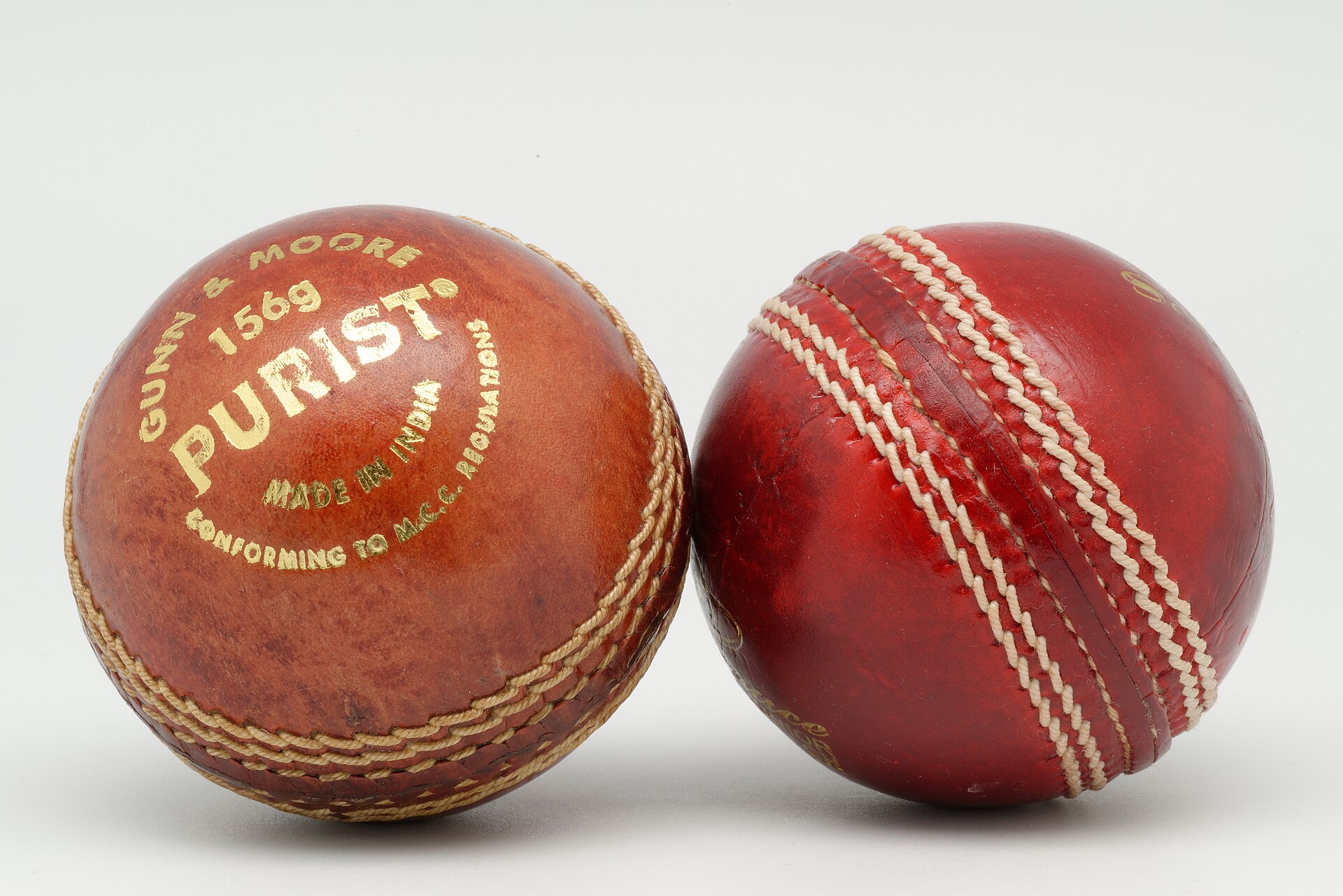
Start with cork, layered and compressed, wound with tightly wrapped string until the core is dense and nearly incompressible. That core is cased in leather — traditionally four quarters — dyed, and joined by rows of stitching that stand proud of the surface. That protruding stitch line is the seam, and it is the most important feature on the ball.
The Laws specify weight and circumference rather than construction: for men's cricket the ball must weigh between 155.9g and 163g and measure between 22.4cm and 22.9cm around, with different specifications for women's and junior cricket. Everything else — how hard the core is, how the leather is finished, how pronounced the seam is — varies by manufacturer, and players notice.
Why it swings
Hold the ball with the seam angled slightly across the direction of flight and the airflow over the two sides stops being symmetrical. On one side the air stays smooth and attached for longer; on the other, the seam trips it into turbulence. Different pressures on the two sides push the ball sideways in the air. That is conventional swing, and it works best while one side of the ball is still smooth and shiny.
This is the whole reason fielding sides polish one side and leave the other alone. As the match goes on, the rough side gets rougher — and once the difference is large enough, a very fast bowler can get the ball to move the other way, which is reverse swing.
Seam movement is different from swing. That is the ball landing on the raised seam and deviating off the pitch, which is why a seam bowler wants a hard ball, a hard surface, and a little luck.
Red, white, and pink
Red balls are used for the traditional long-form game, where a ball is expected to last 80 overs and change character as it ages. White balls were introduced for limited-overs cricket under lights, because a red ball is hard to see against a dark background, and they scuff and lose their shine faster. Pink balls exist to solve the day-night, long-format problem: visible under floodlights but durable enough for a multi-day game.
The bat, briefly
Bats have a legal maximum size. Since the 2017 Code, MCC has limited bat depth and edge thickness as well as width and length, in response to edges thick enough to send mishits for six. The bat is the one piece of equipment that gets legislated whenever it starts winning too easily.
What the scorer needs from this
Know when the ball was changed and write it down. Ball age explains a collapse, a wicketless spell, and a sudden scoring rate, and the bowling figures make far more sense next season if the book says which over the new ball came at.
Why condition matters on the ground
A new ball swings and seams differently from an old one, and most captains plan their attack around that change. The ball also wears unevenly, and the side that keeps the ball in the best condition often gains an advantage. Clubs should check the ball before play, keep spares, and replace a ball that has lost its shape.
Safety
A hard ball can cause serious injury. Players wearing protection, and younger players in particular, should use a ball appropriate to their age and experience.
Match questions
Questions scorers actually ask
- 01 Why does a cricket ball swing?
- The seam and the shine interact with the air. A bowler keeps one side shiny and the other rough, and the swing depends on the seam position and the air.
- 02 Are all cricket balls the same?
- No. Balls differ by format and by use, and the Laws set the weight and size range for each.