The category does the work
Cricket has no single body of statistics. It has several, and they overlap:
- Test cricket — the five-day international game, from 1877 onwards.
- First-class cricket — multi-day matches of a recognised standard, which include Tests but also domestic competitions.
- List A — limited-overs matches of a recognised standard, including One-Day Internationals.
- Twenty20 — again split between internationals and everything else.
A "world record" is always a record within one of these buckets. When two sources disagree, the usual reason is that they drew the bucket differently: whether a particular tour match was first-class, whether a competition counts as List A, whether an abandoned game happened at all.
Averages are ratios, not achievements
A batting average is runs divided by completed innings, so a not-out innings does not increase the denominator. That is why a career average rewards being undismissed and why a specialist who bats twice a season can look statistically enormous. Bowling averages invert the same idea: runs conceded per wicket, which quietly favours bowlers who play in conditions that produce wickets.
Don Bradman's Test average of 99.94 is the most famous number in the sport partly because it is so far clear of everyone else, and partly because it survives every attempt to explain it away with era or opposition.
Qualification thresholds exist to stop nonsense
Almost every published list has a minimum: a number of innings, a number of balls bowled, a number of matches. Without one, the best strike rate in Test history would belong to somebody who faced two balls in 1912. When a record looks absurd, check what the qualification was.
Eras are not interchangeable
Uncovered pitches, timeless Tests, eight-ball overs, no helmets, no fielding restrictions, no DRS, and a fixture list that could be one Test a year — all of these existed inside "Test cricket". Comparing a 1930s average to a 2020s average is comparing two different games with the same name.
This is why the honest form of a records page is a definition, not a leaderboard: say what is being counted, say who is excluded, and link to the statistical database rather than retyping figures that change with the next match.
How to check a claim
Find the number in a maintained database with an explicit filter — competition, date range, qualification — and read the filter before you quote the number. If the source cannot tell you what it counted, it is not a record. It is a rumour with a decimal point.
Check the definition first
Before you repeat a record, check what it measures. A highest score may be for a single innings, for a team, or for a player in a particular format. A record for most wickets may count only international matches, or include domestic and youth games. The definition decides the answer, and two reputable sources can disagree simply because they use different definitions.
Keep your own records accurately
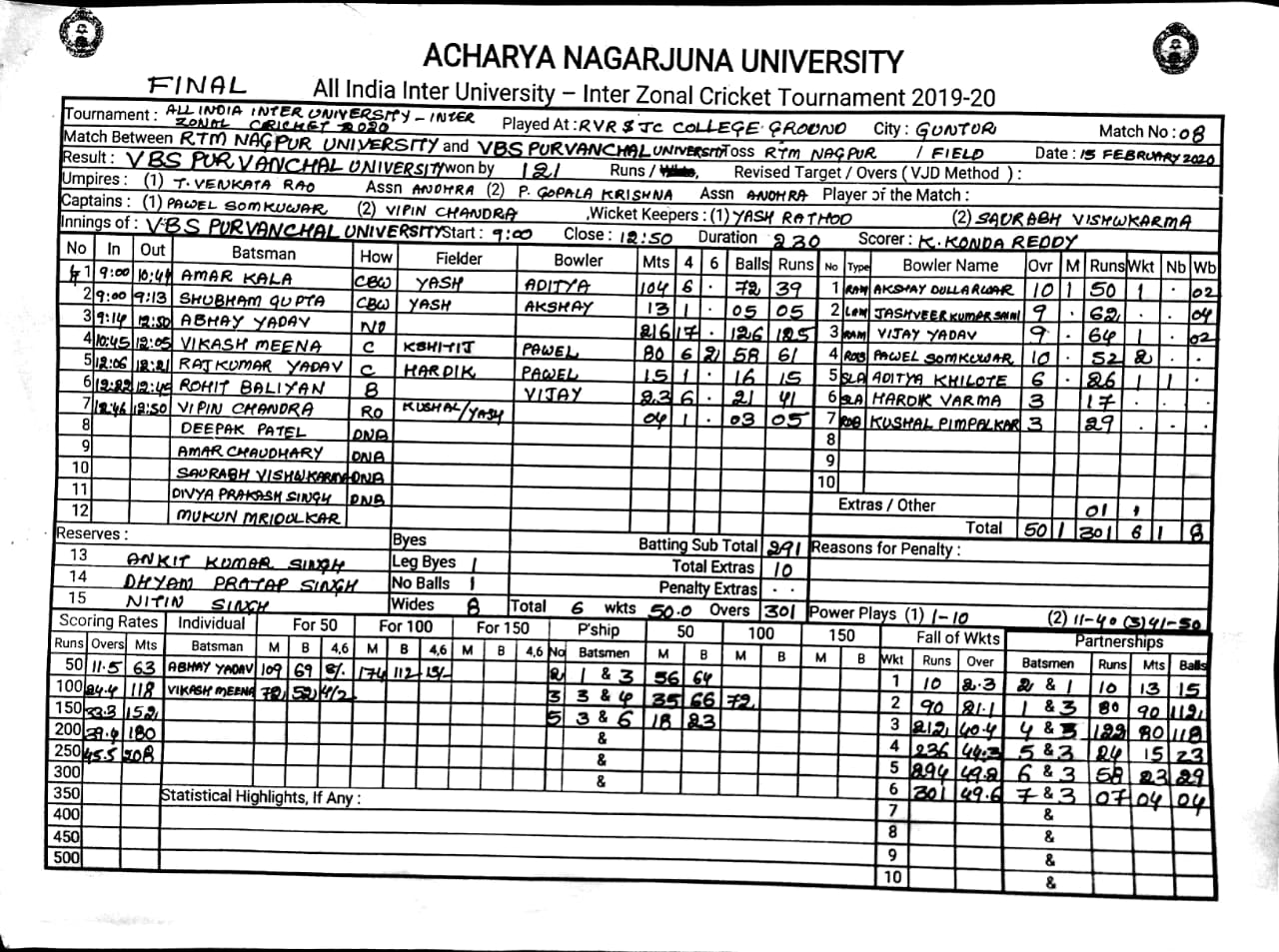
A club that keeps good scorecards can build its own records with confidence. Record every match, check the totals against the last over, and keep the definitions in a short document so the next scorer knows what counts. A club record built on careful scoring is worth more than a clever one built on a guess.
Match questions
Questions scorers actually ask
- 01 Why do two record books disagree?
- They count different things: some include only Test matches, some include first-class or domestic cricket, and some count unofficial games. Read the definition before comparing.
- 02 Is a batting average a record?
- It is a statistic. A record is a milestone such as the highest score or most wickets in a format, and it depends on the competition set.