A phone scorecard is only as good as the discipline of the person holding it. The screen makes it easy to tap quickly, and that speed is exactly what causes most scoring errors. This guide sets out the routine that keeps a club match accurate from the first ball to the result.
Before the first ball
Confirm the two squads, the playing eleven, the captains and the umpires. Record the toss and the decision to bat or bowl. Check the overs per side and any local rules, such as a bowler limit or a powerplay. Most scoring errors start with a wrong team list or a wrong over limit, and both are easy to fix now and hard to fix later.
Agree with the umpires how they will signal wides, no balls, byes and leg byes, so you do not have to guess from the back of the field. A two-minute conversation saves a lot of confusion when the ball is moving quickly.
Record every delivery
Enter each ball as it is bowled, not in batches at the end of the over. Runs off the bat count for the batter. Wides and no balls are extras charged to the bowling side. Neither counts as a legal ball, so the over continues until six legal balls have been bowled. Byes and leg byes are extras too, but they are not charged to the bowler.
When a no ball is hit, record the runs off the bat separately from the no ball itself, because the batter keeps those runs while the bowling side is charged the extra. Many errors in club scorecards come from recording a no ball as a run, or the reverse.
Wickets and the next batter
Record the dismissal type and the batter who was out, and set the new batter at the crease straight away. A wicket without the correct next batter is the easiest way for a scorecard to go wrong, because every later ball is attributed to the wrong person. If the next batter is not clear, pause the scoring and ask the captain rather than guessing.
Retired and unbeaten batters need the same care. Note the reason for a retirement, and confirm whether a batter who retires may return, because the rules of your competition decide that.
Keep the over count honest
A legal delivery moves the count on by one ball. Six legal balls make an over. Changing the bowler at the end of an over matters for the bowler's figures, so set the new bowler before the next delivery and check that the same bowler is not bowling consecutive overs unless your rules allow it.
Use offline mode when signal drops
Club grounds often have poor signal, and a scorer who waits for a connection loses the thread of the match. Keep scoring offline and let the scorecard sync when you are back in range. Check the sync indicator before you leave the ground, and keep a paper tally as a backup if the match matters.
Check the result before you close
Read the result line back to both captains. Confirm the winner, the margin, and any no result or tie. Check the total runs and wickets against the last over, because a single missed run changes the margin. Once the match is closed, changes need a formal correction, so take the extra minute now.
What a good scorecard looks like
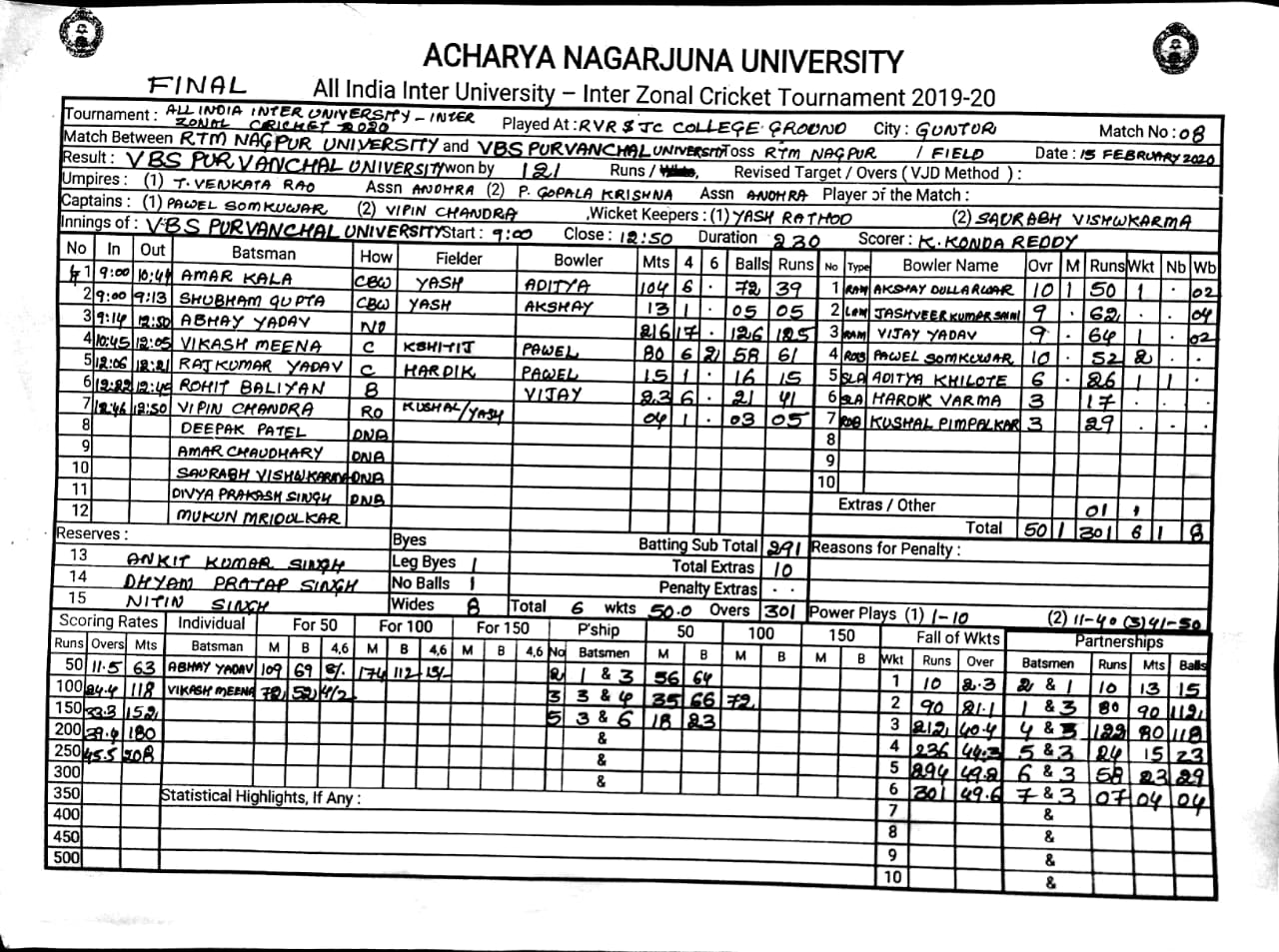
A good scorecard is boring to read. Every batter has a dismissal or a not out status, every bowler has overs and figures that add up, and the extras total matches the extras recorded ball by ball. If a number surprises you, check the ball it came from before the match is published.
Common questions
The fastest way to improve is to review one match with the umpire after the game, looking only at the extras and the wickets. Those two areas cause most of the errors, and five minutes of review usually shows the pattern.
Match questions
Questions scorers actually ask
- 01 Is a wide counted as a ball bowled?
- No. A wide is an extra, and the bowler must bowl another legal delivery in its place, so the over is not complete until six legal balls have been bowled.
- 02 What do I do if I miss a ball?
- Ask the umpire and both captains what happened, and correct the record straight away while the details are still fresh. Do not guess the runs.
- 03 Can I score a match alone?
- Yes, if you can keep up. Many club scorers work alone for a single match, but a second person checking the totals every over reduces errors considerably.