Three different outcomes
These words are not synonyms, and tables depend on the difference.
- Tie: both sides finished with the same score, and the innings were completed under the rules.
- No-result: the match started but could not produce a winner, usually through rain or bad light.
- Abandoned: the match was stopped and cannot be completed under the playing conditions.
Tie
If both innings completed at 140 and the competition uses a super over, a super over decides the winner. If there is no super over, the points are shared as the playing conditions say.
No-result
If DLS was in force and the chase did not get the minimum overs, it is usually a no-result rather than a tie. Other no-results follow the playing conditions: a match that is not completed within a minimum number of overs per side, for example.
Abandoned
A match abandoned before a ball was bowled is usually excluded from the table. A match abandoned after an innings started may still count if the rules say so, with points or NRR taken from the overs bowled.
What the scorer writes
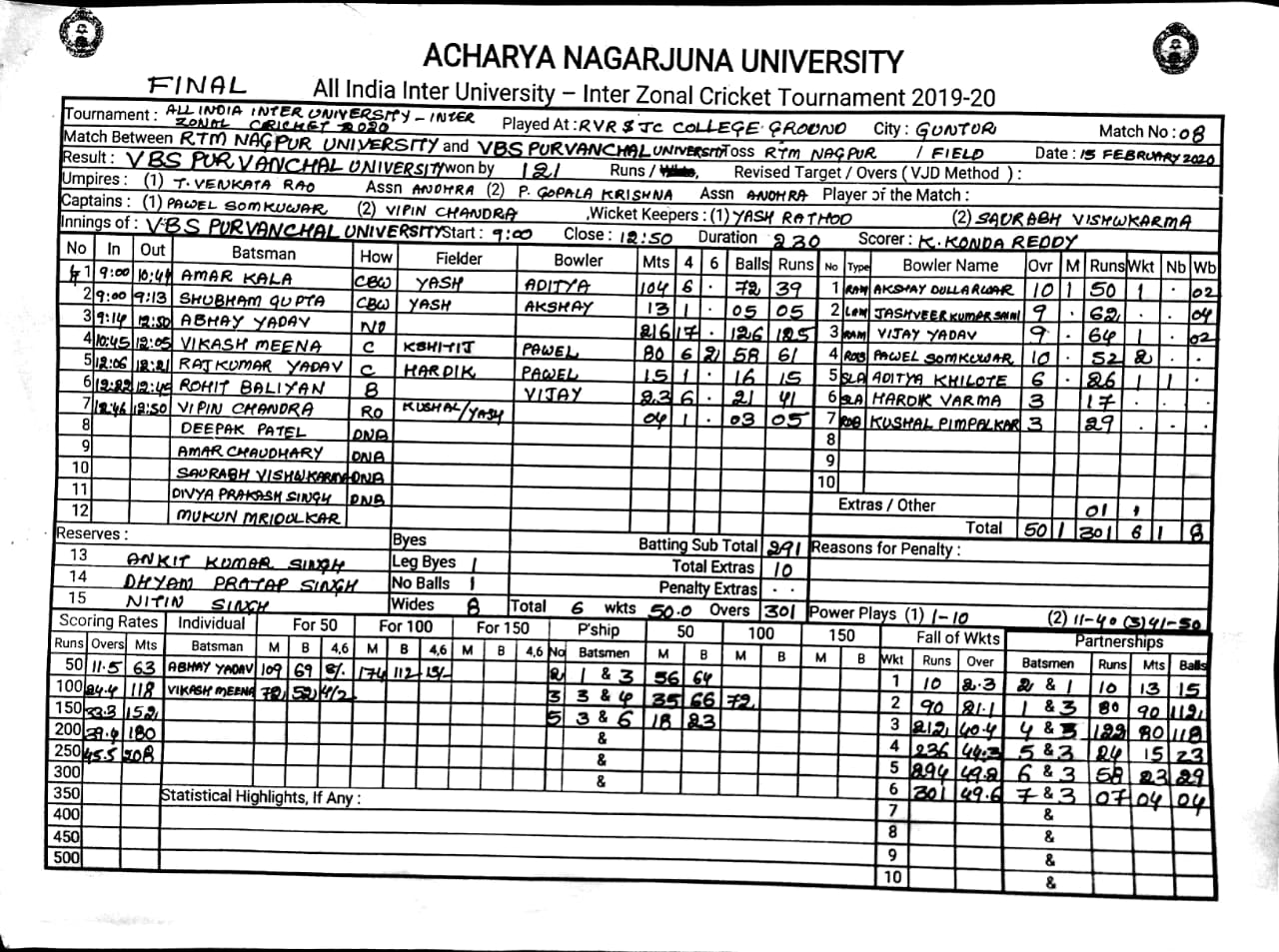
Write the playing-condition outcome, not the car-park version. "Tie" is a tie under the rules. "Rained off" is a no-result or abandoned, and the book should say which. Record the time the match stopped and the final score.
Common mistakes
- Calling a no-result a tie on the scorecard.
- Forgetting to record the minimum-overs threshold when a match is shortened.
- Publishing points before the result is confirmed by the umpires.
Citations
MCC Laws of Cricket for the definitions. The competition's playing conditions for points.
Match questions
Questions scorers actually ask
- 01 Is a tie the same as a draw?
- No. A tie happens in a limited-overs match when scores are level and the innings are complete. A draw is a Test outcome, when time runs out with no winner.
- 02 Do both teams get points for a no-result?
- Usually each team gets one point, but this depends on the competition. Check the playing conditions.
- 03 What if the rain stops play after the first innings?
- Check the minimum-overs rule and DLS. Often the result depends on whether the chasing side had enough overs to be a valid chase.